Dan DiMaggio

AT&T Southeast Workers End Month-Long Strike
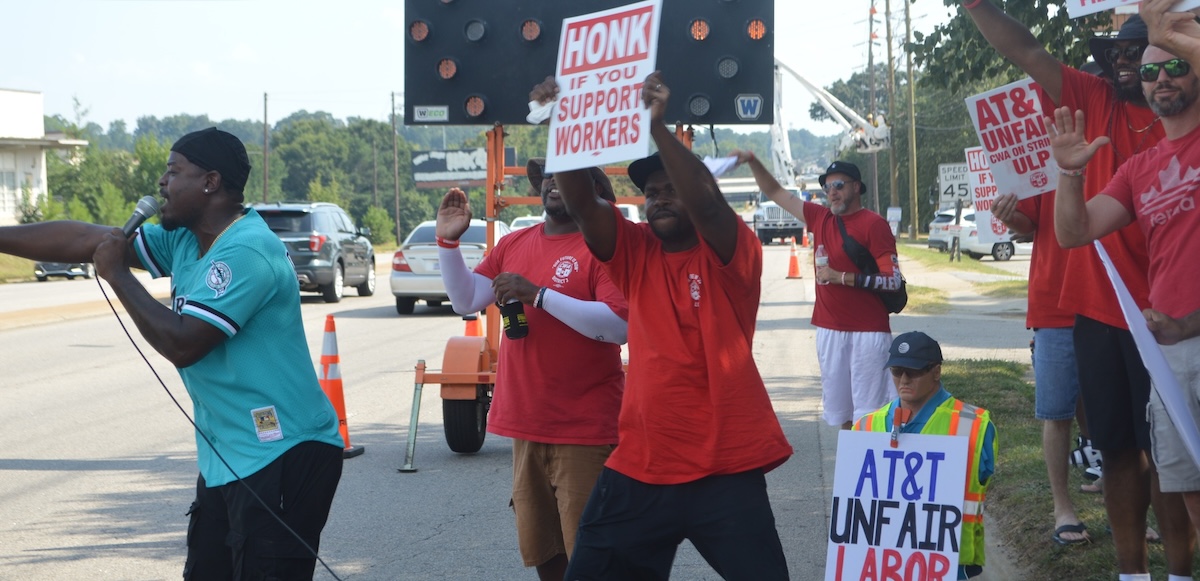
Black and white men, most in red union T-shirts, picket energetically on a streetcorner. Man in front, in turquoise shirt, is talking or chanting into a mic, arm outstretched. Everyone's pose is active. Printed signs say "honk if you support workers" and "AT&T unfair, CWA on strike, ULP." One handmade sign, partially visible, says "AT&T Unfair Labor." The man in the center is holding his sign high and wind or movement blows his red shirt.

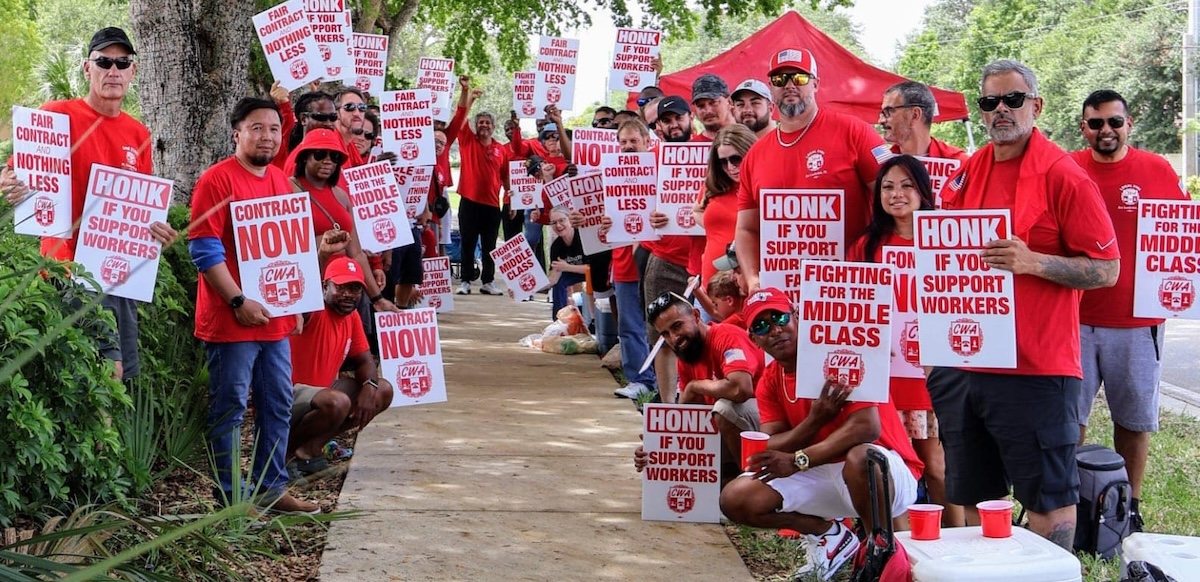
Seventeen thousand AT&T workers in the Southeast returned to work September 16 following a month-long strike.

Members of the Communications Workers (CWA) in nine states from Kentucky to Florida walked out on an unfair labor practice strike August 16 over accusations the telecom giant was bargaining in bad faith.

The strike included technicians, call center workers, and others who build and maintain the AT&T network.
Main Image: 

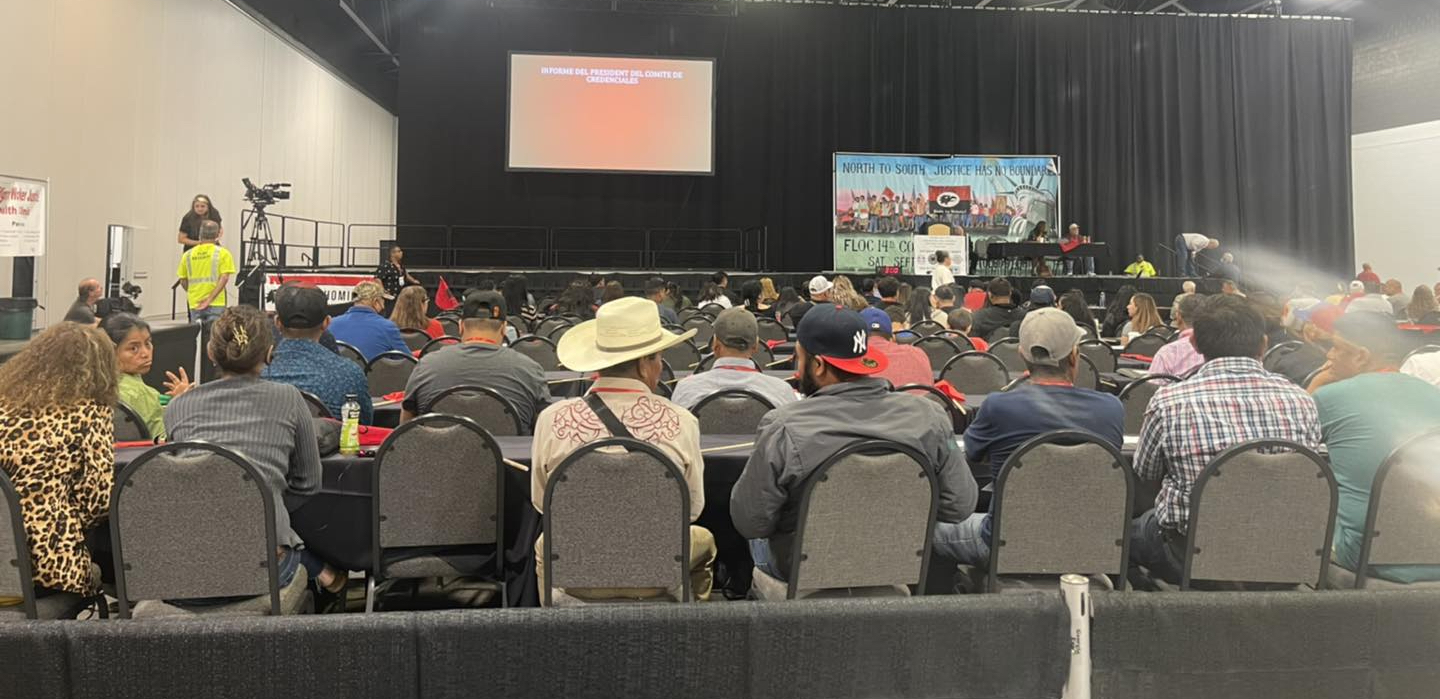
Update: FLOC President Baldemar Velasquez was re-elected to a 15th term. He and his slate won 210 votes, while the Los Trabajadores Primero (Workers First) slate garnered 19.

Members of the second-largest farmworkers union in the U.S. will elect leaders on September 21 and 22. It’s a rerun of an election two years ago, following accusations that many members were effectively disenfranchised in that vote.

Main Image: 

UPDATE: On September 15, CWA announced tentative agreements with both AT&T Southeast and AT&T West. Workers at AT&T Southeast returned to work on September 16. Members will still need to vote on both deals.

Seventeen thousand AT&T workers in the Southeast have been on strike since August 16. They may be joined soon by another 8,500 workers at AT&T in California and Nevada.

Main Image: 
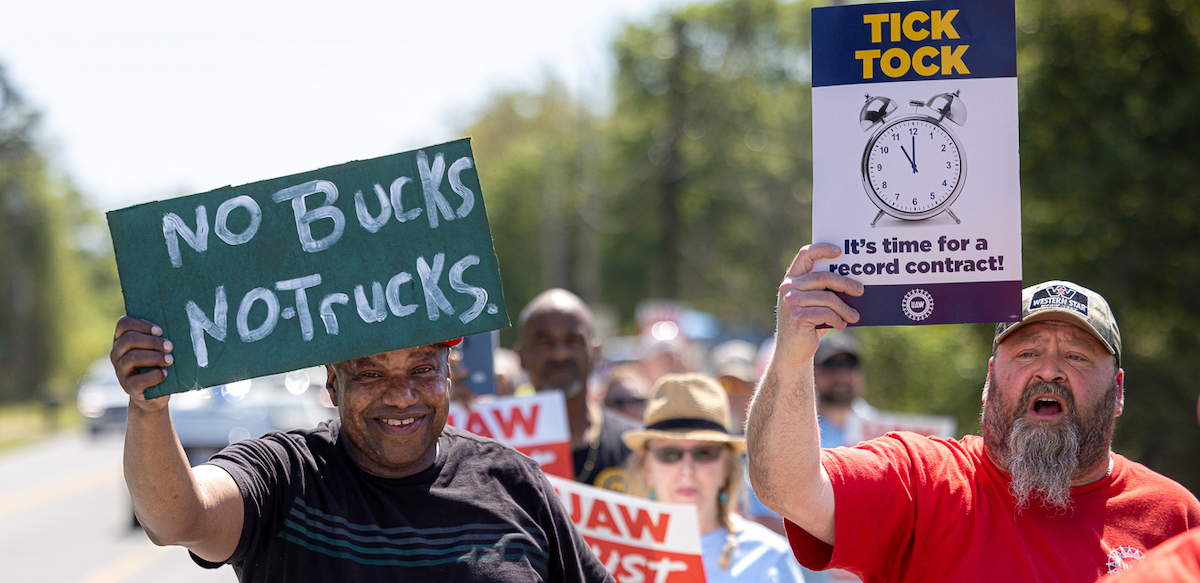
Auto workers with signs saying no bucks, no trucks and Tick Tock Time for a Record Contract march towards the camera

North Carolina heavy truck and school bus manufacturing workers won 25 percent pay increases and ended wage tiers after an energetic contract campaign and strike threat against Daimler Truck.

The United Auto Workers unionized these plants in the 1990s and early 2000s—but since then, wages had stagnated. Starting pay was low, and the plants were stuck on different wage scales. At Thomas Built Buses, the largest school bus manufacturing site in the U.S., assembly workers topped out at $24, $5 less than their counterparts at Daimler’s Mount Holly truck plant.

Main Image: 
A blue box shows with the notation: “Photo license expired”

Major contract fights in 2023 at UPS, the Big 3 automakers, and Hollywood studios set the tone for next year’s contract campaigns. Impressive gains and increased transparency got members of other unions asking, “Why can’t my union be like that?”

The bar will be high. Many of the contracts expiring next year date from before the pandemic, and before inflation started taking a bite out of paychecks. Some unions took concessions, like creating lower wage and benefit tiers, that members are ready to fight to undo this time around.

Main Image: 
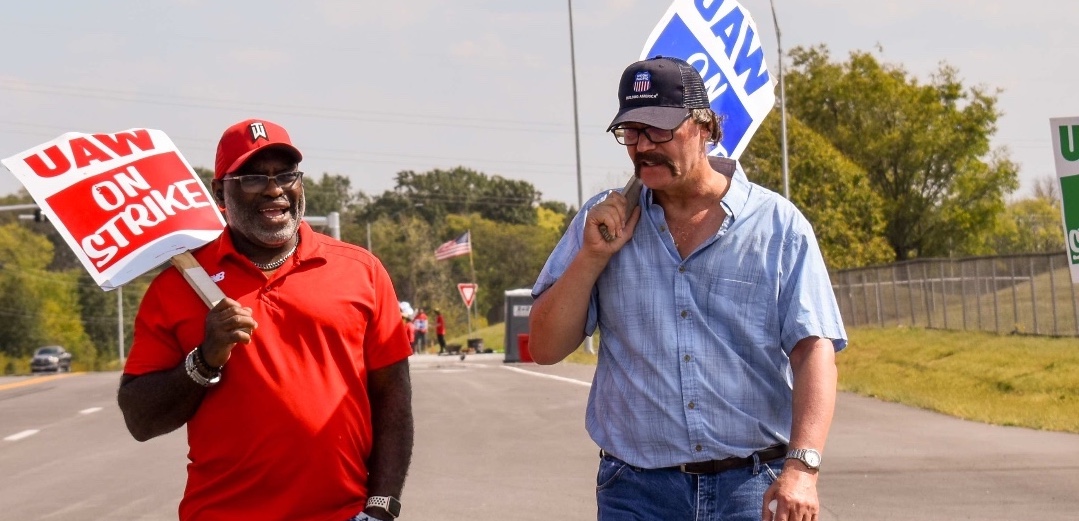
Two men, one Black and wearing red and one white wearing blue, walk together talking, each with a matching red or blue picket sign that says “UAW on Strike.”

A previous version of this article was published on October 31.

After a six-week escalating strike, the Auto Workers (UAW) ratified agreements with each of the Big 3 automakers. The deals are a sharp about-face from decades of concessions.

Main Image: 
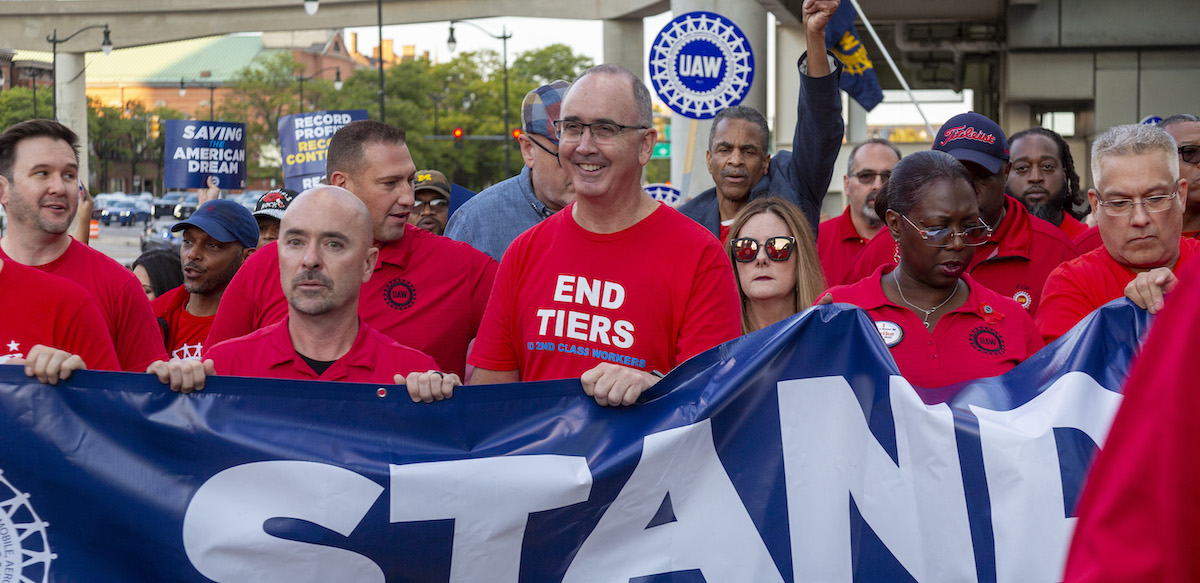
A group of men and women in red T-shirts stand holding a blue banner, the word ‘Stand’ is visible.

All three dominoes fell in a few days.

The Auto Workers (UAW) now have agreements with each of the Big 3 automakers. The new contracts are a sharp about-face from decades of concessions.

The tentative agreements go further than many thought possible on issues that the companies insisted were off the table. Stellantis agreed to reopen its idled Belvidere assembly plant. GM and Stellantis will include new battery plant workers in their master agreements.

Main Image: 
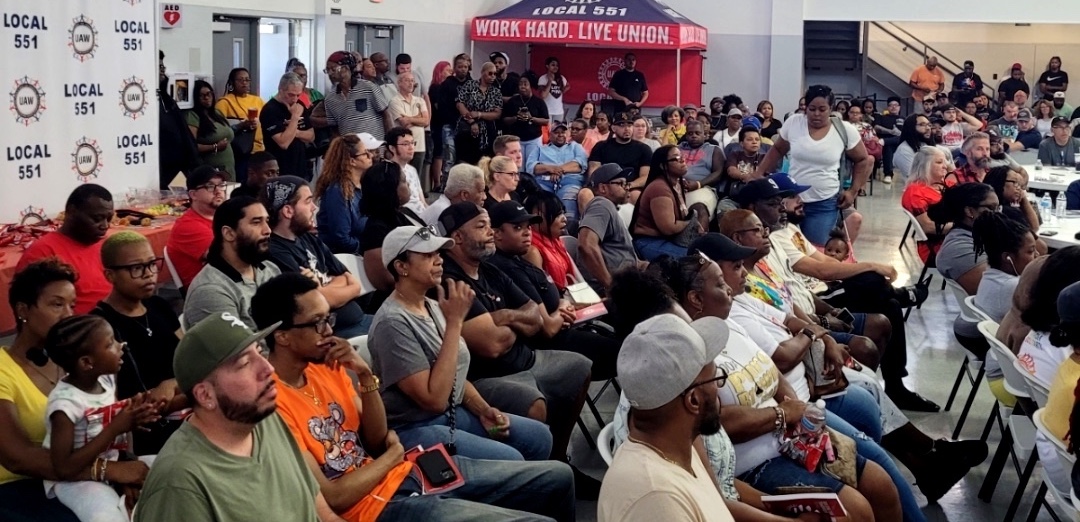
Photo shows a packed hall of autoworkers sitting on folding chairs with standees in the back.

The clock is ticking toward September 14 at midnight, when the Auto Workers’ contracts with the Big 3 automakers expire. The new leaders of the UAW have come out swinging, and in quickly growing numbers, members are stepping up to prepare for a strike.

The agreements cover close to 150,000 workers at Ford, General Motors (GM), and Stellantis.

Main Image: 

Bargaining between the United Auto Workers and Big 3 automakers is looking very different this year.

New UAW leaders ditched the public handshake ceremony with company executives that has traditionally kicked off bargaining. “I’m not shaking hands with any CEOs until they do right by our members,” said President Shawn Fain in a Facebook live talk July 11.

Pages