

Become a monthly donor!

Main Image: 
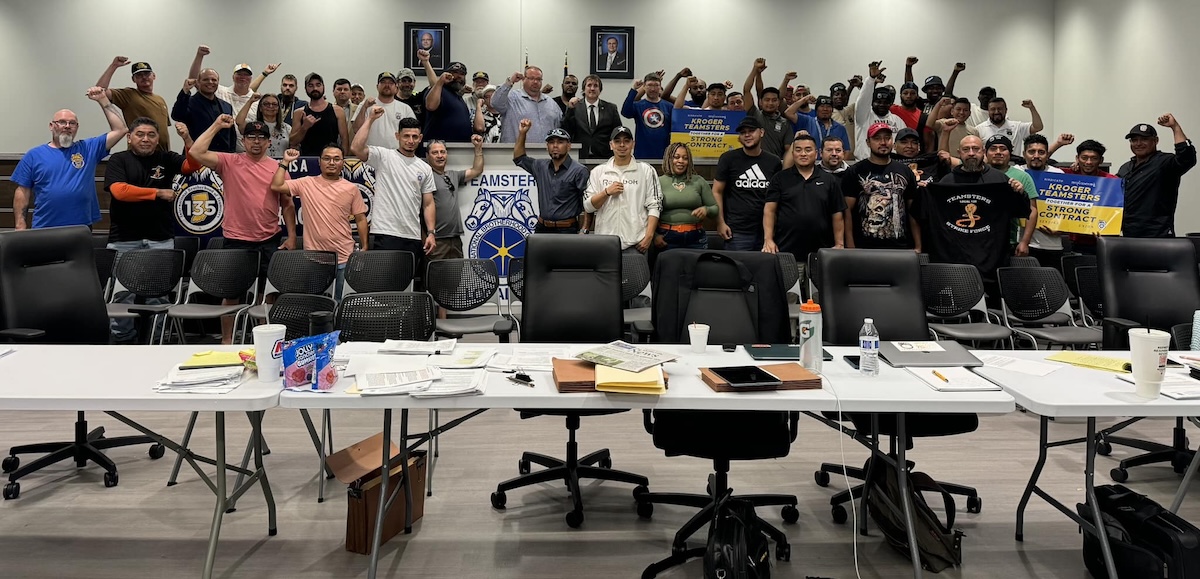
A group of 50 people stand behind a bargaining table with fists raised.

Since electing new leadership in 2022, Teamsters Local 135 in Indiana has completely changed the way it conducts negotiations. It’s using open bargaining to revitalize the local.

Under the previous leadership, a small bargaining team negotiated behind closed doors. Gag orders ensured that members would know nothing about negotiations until an agreement was presented for a vote.

Main Image: 
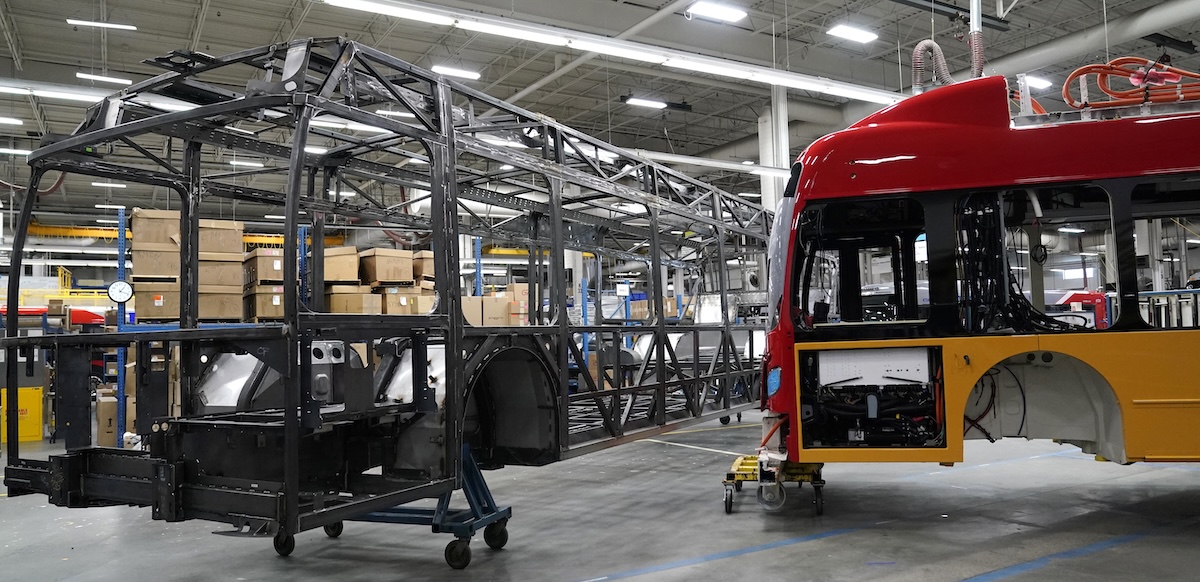
The skeleton of an unfinished bus, and the outer shell of another are shown in a factory

What does it take to unionize factories today, especially in the South? In the last two years, bus manufacturing workers secured first union contracts and a national master agreement across New Flyer facilities in three states.

Their strategy shows how, with pressure from transit agencies that buy the buses, union members from organized sites leading outreach to non-union workers, and fighting stewards on the line, workers can unionize plants across a whole company.

Main Image: 
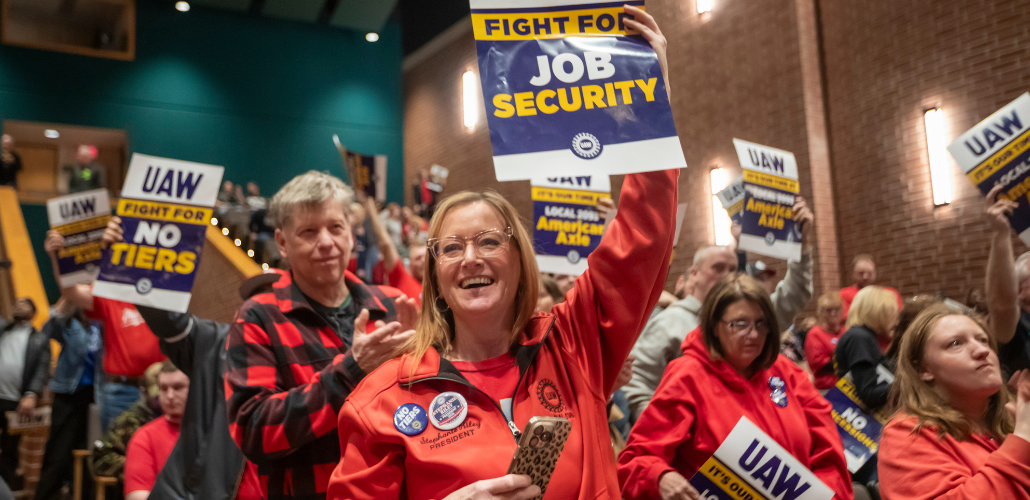
People, mostly wearing red, hoist printed signs in a packed indoor rally. A woman in the foreground, smiling, wears a "no tiers" button. Her sign, held high, reads "UAW: Fight for Job Security." Other visible signs say "UAW: Fight for No Tiers" and "UAW: It's Our Time at Local 2093 American Axle." A man behind her, applauding, wears a red and black buffalo plaid shirt. Most people visible in the photo appear to be white.

Axles are to vehicles what joints are to human bodies: the mechanism that facilitates movement. For parts worker Rosie Dodge, who has worked on a paint line for American Axle & Manufacturing for 10 years, the metaphor is embodied in the work environment.

“They just do not treat us like people,” Dodge said. “We are often referred to as bodies, like they don’t even want to give us credit for having a pulse. They do what they call ‘manpower moves,’ and they say, ‘We just need bodies over here.’”

La gerencia les cobraba 100 dólares semanales por trabajar, alegan los trabajadores. Pero están luchando por sus derechos.
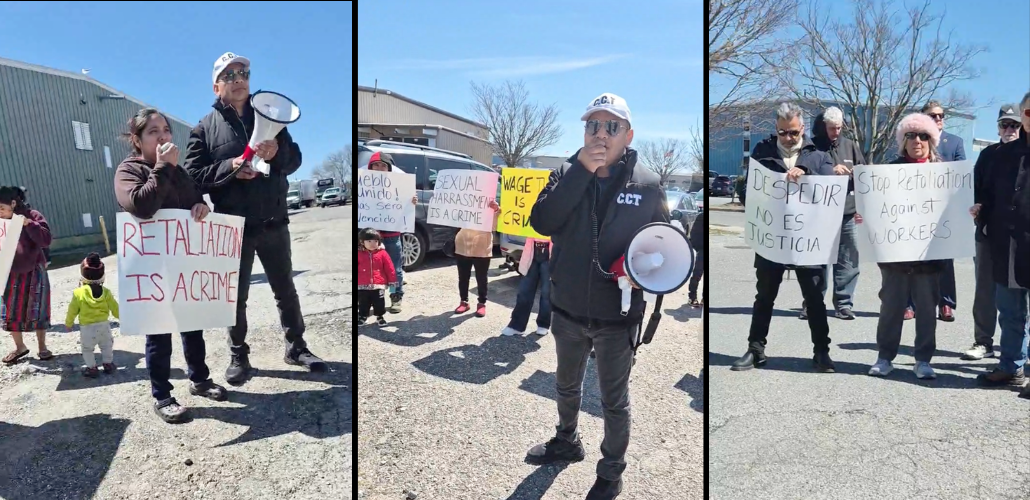
Cuando Evelyn comenzó a trabajar en Marder Trawling, un centro de procesamiento de mariscos en New Bedford, Massachusetts, se enteró de una condición de trabajo inusual: tendría que pagar discretamente a su gerente $100 dólares semanales por el privilegio de trabajar, dijo. “Yo no tenía trabajo, y tengo a mis niños. Yo le dije, ‘Está bien. Con tal de tener un trabajo.’

Management Charged Them $100 a Week to Work, Workers Say. They’re Fighting Back.

When Evelyn began work at New Bedford, Massachusetts, seafood processing center Marder Trawling, she learned of an unusual condition of employment: She’d need to quietly pay her manager $100 per week for the privilege of working, she said. “I didn’t have work, and I have kids,” she said. “So I told him, ‘All right,’ just to have a job.

“There were times I didn’t have money for rent, bills, or food for my kids,” she told Labor Notes, but her manager was happy to oblige: she could skip a week’s payment, and owe $200 the next week.

Rutgers Labor Center to Celebrate Life and Legacy of Tony Mazzocchi

April 29, 2026 / Jenny Brown
A bearded man speaks at a microphone with his hands wide open

In the 1960s and 70s, conservative leaders of the AFL-CIO and many national unions viewed militant activists in the civil rights, anti-war, environmental, and women’s movements with alarm. When student radicals started migrating from campus and community organizing to unionized workplaces, labor officials did not welcome them.

It’s Our Money: Union Members Fight for Good Public Pension Investments
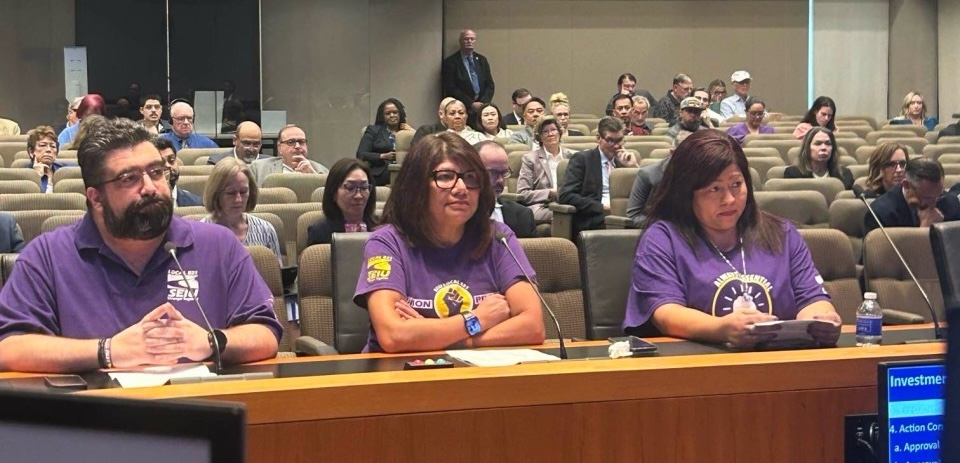
April 29, 2026 / Jenny Brown

Union members in many states and cities are pushing for a stronger voice in pension investments. And sometimes they’re actually winning: They’re holding pension boards accountable and advocating for investments that insure worker protections, climate resiliency, and decent retirement benefits.

Main Image: 
Two workers place a slab of manufactured stone against a larger slab.

Silicosis is a lethal workplace illness that killed thousands each year up through the 1960s. In recent decades, thanks to union workplace safety fights, it became much rarer. Annual deaths dropped to the hundreds. The disease affected mostly older workers with longer exposures.

So it was hard for stonecutter Gustavo Reyes Gonzalez, 35, to get a clear diagnosis in 2019 when he first developed a cough and shortness of breath. It wasn’t until two years later that he was told he had silicosis—and only had a year to live.

Main Image: 
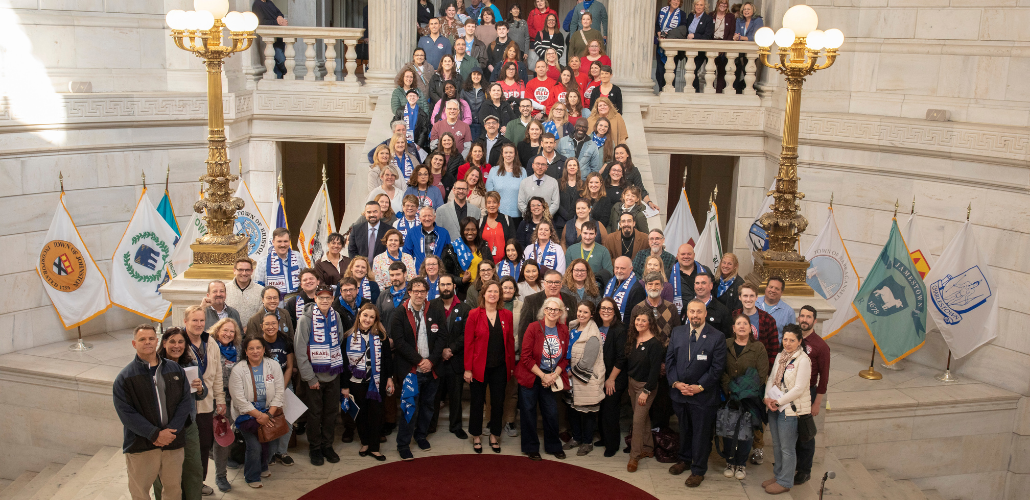
Fifty people pose on the stairs inside the Rhode Island capitol.

Over the last decade Rhode Island has been a hotbed of progressive, pro-worker legislation. But it wasn’t always this way. It took years of proactive organizing by the labor movement on legislative and electoral campaigns.

This “blue” New England state was led by Republican Governor Donald Carcieri from 2003 to 2011. During his term he cut 1,000 public sector jobs, passed a regressive property tax law, and attacked pensions for teachers and other public workers—actions that were enabled by centrist Democrats in the state legislature who were lukewarm towards labor.

Pages

Subscribe to Labor Notes RSS