SUBSCRIBE
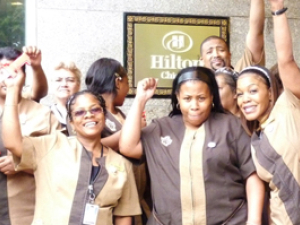
Hotel workers have wrested contracts from Hilton after a year and a half of pickets, lobby takeovers, boycotts, and short strikes. They hope the wins will set off a cascade of agreements in the recovering hospitality industry.
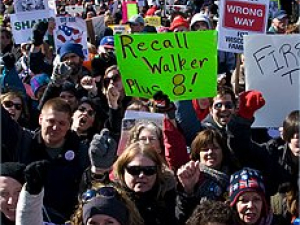
Wisconsin Republicans copped to the fact this week that their real goal was smashing unions, not closing the state’s budget gap. For the rest of the labor movement, it’s a sign of things to come. What's the road map to win round two?
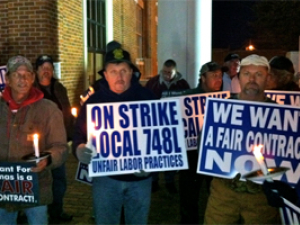
A dozen striking Steelworkers trekked from Mississippi to Ohio last week, hoping to insert a few uncomfortable questions into the clubby confines of their company’s shareholders meeting. They didn't get far.
Like other public employees, teachers find their collective bargaining rights under fire in the Republican-governed states. But the attack on teacher job security, and the drive to replace public schools with charters, are universal—and bipartisan.
A judge issued a temporary restraining order today to block publication of Governor Scott Walker’s anti-collective bargaining law. What does the bill contain, and what would it mean for public workers' current contracts?
The revolt in Wisconsin is the most impressive response of American workers to the employer offensive since it began 31 years ago—remarkable for its numbers, for its sustained nature, for the labor-community-student coalition that spontaneously arose.
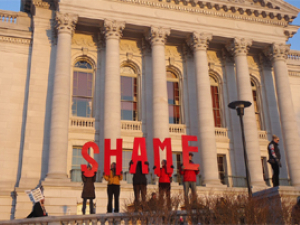
The Capitol Square in Madison is again packed with union members of every stripe, enraged by the surprise passage of a bill to gut public employee unions. A hundred were dragged from a sit-in inside the Capitol.
Nursing techs, service, and maintenance workers at Pocono Medical Center escalated the defense of their union with a three-day strike this week.
Stunned and outraged, thousands of Wisconsinites forced their way into the Capitol tonight after Republicans suddenly passed their bill attacking unions, without Democrats.
The traditional union approach to budget politics is to accept the limits of what’s possible and push for the best deal within those fiscal constraints. Some unions are looking beyond “stop the cuts,” and showing how to fund services.
Governors cry, “There’s just no money.” But some people have plenty, while taxes on corporations and the rich have fallen for decades. Fair taxes could stop the financial hemorrhaging and make up all the deficits.
As the fight for basic union rights escalated in Wisconsin, the Madison-based South Central Federation of Labor endorsed the idea of a general strike if Governor Walker’s union-busting bill passed.
Were the leaders of the Wisconsin state employees and teachers unions wise to announce, as soon as Governor Scott Walker introduced his “budget repair,” that they were happy to take concessions on benefits, as long as they could keep the right to bargain?
Ohio Republicans are pushing through an agenda attacking union rights and cutting government services in a state mired in deep recession—but not before unions, students, and community groups bring the fight to every corner of the state.
Wisconsin showed its lively protest colors with 7,000 protesters joining a jazz funeral march. They challenged the governor's anti-union measures and service cuts, and also concessions offered by public sector union leaders.