Portland Labor Rally Against ICE Attacked with Tear Gas
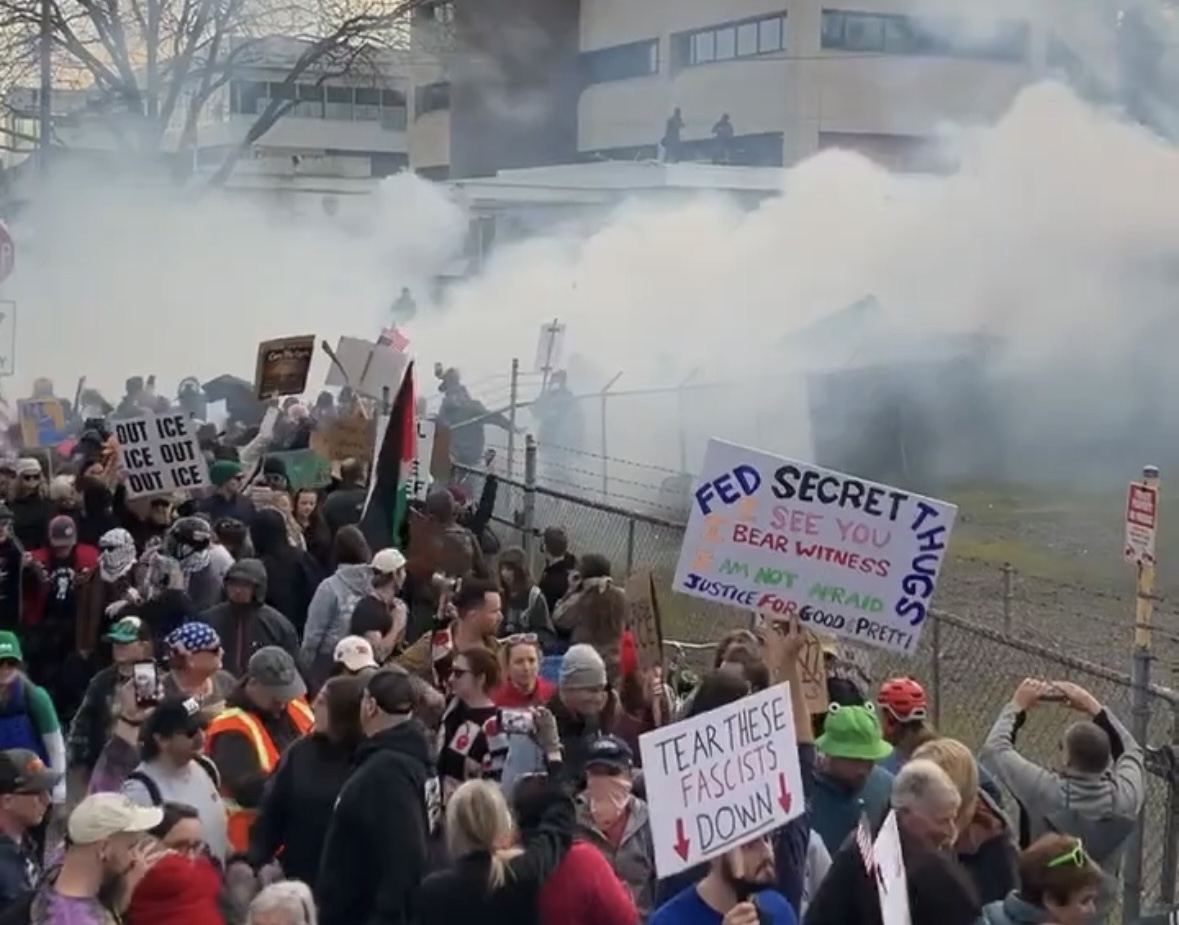
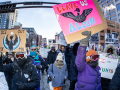
A Portland labor march, with 30 unions represented, was enveloped in tear gas shot by federal agents. There was no warning, participants said. Photo: Shonna Roberts
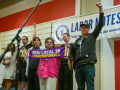
On January 31 my husband and I stood shoulder to shoulder with thousands of union members and community allies in Portland’s South Waterfront. We gathered for a peaceful, permitted rally and march: “Labor Against ICE.” More than 30 labor organizations had united under one banner for the first time in my memory, not just for contract fights or strike support, but to say “ICE Out” and “Solidarity Now.” I’m president of the Longshore (ILWU) Auxiliary 11 and my husband Jamison is president of ILWU Local 4.
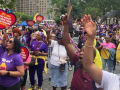
There was music. There were speakers about peace and unity. Children ran around with their families. Retirees, pensioners, nurses, teachers, and working people filled the park. You could feel it in the air: hope, resolve, togetherness. We sang “Bella Ciao,” raising our voices for our immigrant siblings, people who are an integral part of our communities, our workplaces, and our struggles.
We marched with union banners at the front, heading down Moody Avenue before turning onto Bancroft toward the ICE facility. As we passed a young boy playing the Star-Spangled Banner on a keyboard, a father lifted his son onto his shoulders, waving an American flag. “Are we done yet, Daddy?” he asked. “Not yet,” his father said with a smile, “we have to do our civic duty.” That moment of joy, of civic pride in standing for justice, is one I won’t ever forget.
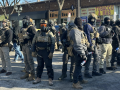
But then everything changed. We heard boom, boom, boom, boom, one after another. It was tear gas. Without warning, federal agents unleashed chemical munitions on the crowd, including children and the elderly. Shouts of “Gas! Gas!” rippled through the march. People began turning around and trying to leave calmly, but the waves of gas spread fast, filling the blocks around us and choking everyone in its cloud.
Nobody expected this. That little boy with his flag. Elderly folks in wheelchairs. People with canes. Families with pets. We weren’t on the streets to “riot” but to stand up for justice and human dignity, the core of what labor solidarity means. Yet, chemical agents rained down on us with such intensity that people were vomiting, crying, and desperately covering their faces. Volunteers tried to help escort the elderly away, but there was no escape from the choking clouds.
CALCULATED USE OF FORCE
What began as a day of unity ended as a brutal, premeditated assault on peaceful protestors representing over 30 unions. This was not a spontaneous moment of chaos. This was a calculated use of force against nonviolent protesters. News coverage confirms that federal agents met a family‑friendly, labor‑led march with repeated rounds of tear gas and other munitions, triggering condemnation from city leaders.
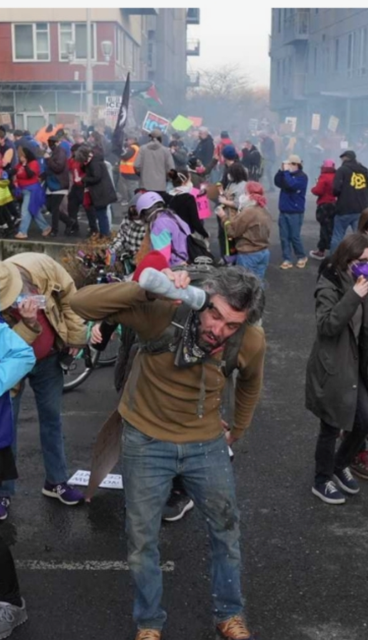
Eyes burning and hearts heavy, we felt something stronger than anger: betrayal. We were disillusioned with a government that would attack its own citizens exercising their First Amendment rights. And then, as unionists always do, we asked: What’s next? What’s the action? Who needs us? How can we help?
That is what radicalizes a labor movement—not just corporate attacks or contract violations, but state violence against peaceful working people.
IT’S A LABOR ISSUE
The struggle against ICE isn’t separate from the labor movement; it is a labor issue.
Immigration enforcement functions as a tool of labor discipline. When workers are terrorized by raids and deportations, that fear is exploited to suppress wages and weaken organizing power. Workers without secure status face exploitation and isolation, conditions that undercut all workers’ bargaining power. The fight against ICE is exactly where labor’s moral and strategic power belongs.
The Minneapolis action on January 23, where hundreds of businesses closed and thousands of workers joined a broad community demand for ICE to leave, points toward the kind of collective leverage working people can bring to this moment.
Our own union’s history is clear about this too. The ILWU has an official policy against fascism, rooted in the belief that unchecked authoritarianism threatens all workers. The ILWU’s International Executive Board reaffirmed this commitment in December 2025, quoting a 1945 warning from CIO President Philip Murray, who said, “It is not impossible for fascist ideas to conquer America.” It’s a reminder that working-class institutions either defend democracy in practice or authoritarianism fills the vacuum.
CLARITY AND UNITY
In the hours after the assault, Portland officials issued a statement describing “heavy waves of chemical munitions” used against a peaceful daytime protest where, they said, the “vast majority” of people “violated no laws, made no threat, and posed no danger.” The statement ended with a blunt message: “To those who continue to work for ICE: Resign… Leave.”
In the days after the rally, the ACLU of Oregon filed an emergency action seeking to stop Department of Homeland Security officers from using crowd‑control munitions against people nonviolently protesting, or reporting, at the Portland ICE building. On February 3, a federal judge issued a temporary restraining order limiting how DHS officers can use chemical and projectile munitions against nonviolent protesters and journalists.
That legal win matters, but it doesn’t un-gas children. It doesn’t restore the trust that was broken when federal forces treated a permitted labor march like an enemy battalion.
We are union members. We know solidarity isn’t just a word, it’s a practice. It’s showing up for each other when it’s hard. It’s not just supporting labor actions on the picket line. It’s standing with immigrant communities when they are under attack.

That’s what we did on January 31. And though we were assaulted for it, we are not backing down. We will continue building alliances with organizations fighting deportations and defending civil liberties because a labor movement that doesn’t fight for justice for the most vulnerable is not practicing true solidarity.
In the face of violence and intimidation, we found clarity and unity. And we will keep walking together, through tear gas, through courtrooms, and into tomorrow, to build a movement that is truly collective, just, and unbreakable.
Shonna Roberts is president of ILWU Auxiliary 11 in Vancouver, Washington.