Malaysian Workers Protest Union-Busting at Apple Supplier
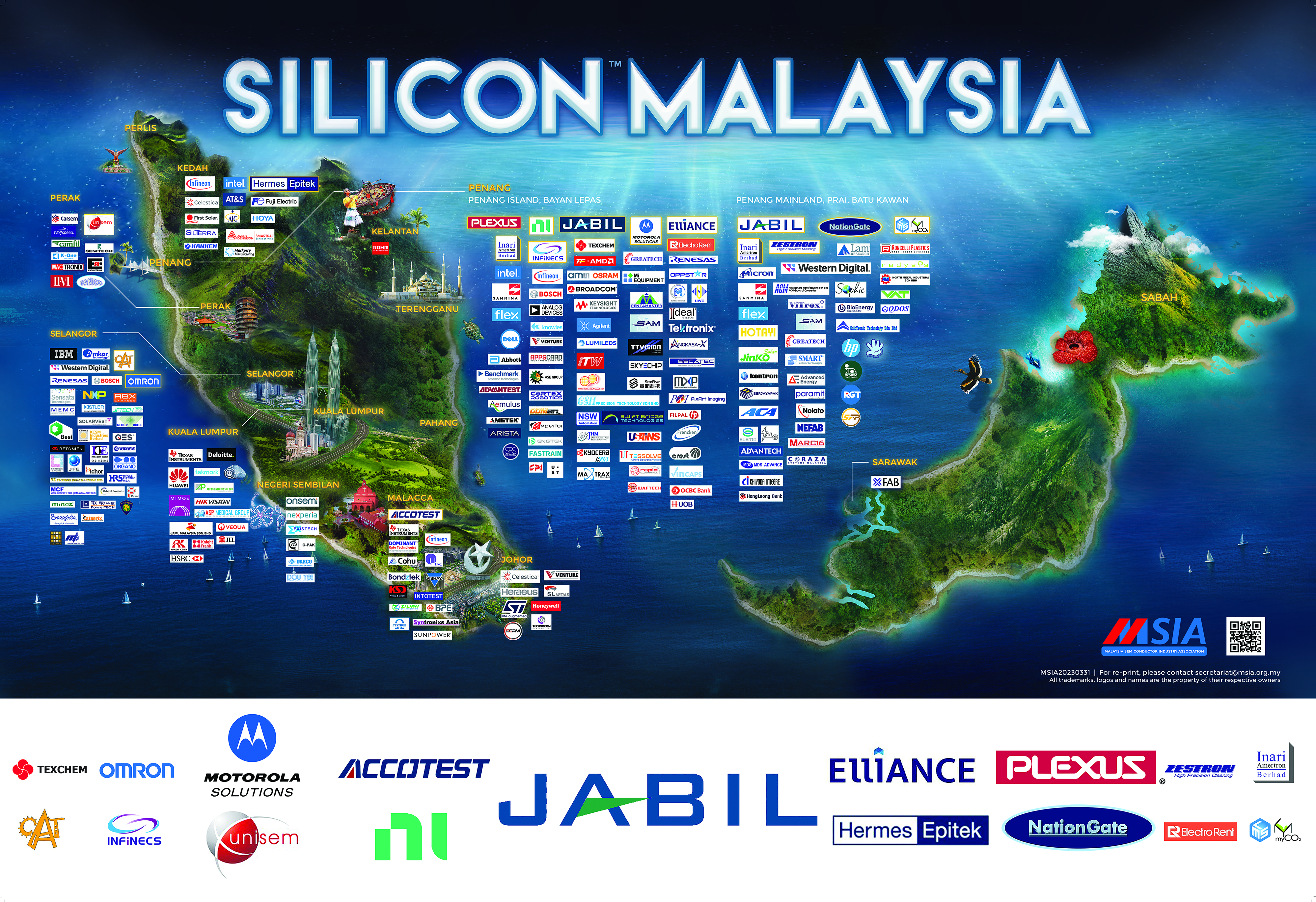
Malaysia has one of the largest electronics manufacturing industries in the world. There are 200,000 electronics workers in the Penang region, on the country’s northwest coast, sometimes referred to as the “Silicon Valley of the East.” Photo: EIEUNR
Workers in Malaysia who make screens like the one you are reading this article on are protesting after union leaders were fired following an organizing victory. The workers make LED screens for companies including Apple.
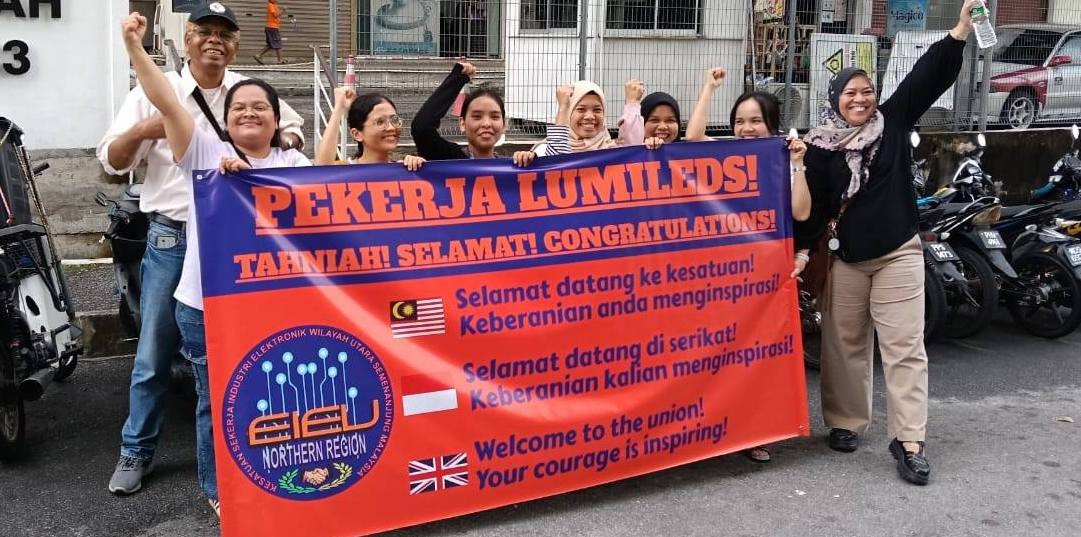
The Electronics Industry Employees Union Northern Region (EIEUNR) won an election in November to represent workers at the Lumileds factory in Penang. Of the 1,200 eligible voters, 65 percent voted for the union, with 89 percent turnout.
The union won despite company threats to deport migrant workers or evict them from company housing if they supported the union. The employer also excluded 200 union supporters from the voter list, and told workers in captive-audience meetings that they would only get better wages and benefits if they voted against the union.
Now instead of bargaining, EIEUNR says, Lumileds management is continuing to try to bust the union. Sukhairul Bin Khalid, one of the leaders of the organizing effort, was fired on January 6 for stepping in to defend a migrant worker who supported the union from harassment by an anti-union co-worker.
Several migrant workers who supported the union have been deported. And the company opened disciplinary proceedings against union chair Syahnorizal bin Abdul Hamid.
The union is calling for the immediate reinstatement of all fired and deported members with back pay, an end to all disciplinary proceedings against union leaders, and for Lumileds to bargain in good faith with the union.
On January 28, a dozen workers delivered a petition signed by 400 union members to management protesting the firing of Bin Khalid and discipline against bin Abdul Hamid. The company has agreed to drop the case against the union chairman.
‘SILICON VALLEY OF THE EAST’
Malaysia has one of the largest electronics manufacturing industries in the world. There are 200,000 electronics workers in the Penang region, on the country’s northwest coast, sometimes referred to as the “Silicon Valley of the East.”
Overall, more than 600,000 electronics workers in Malaysia play an integral role in the supply chain of companies like Microsoft, Meta, Apple, and Bose. Electronics goods account for nearly 40 percent of the value of Malaysia’s exports.
But few workers in the industry belong to unions. That’s despite the fact that many of the biggest electronics companies have codes of conduct in which they commit to respect workers’ freedom of association throughout their supply chains.
Electronics unions were banned beginning in the 1970s, and then restricted to single enterprises until the late 2000s, dramatically weakening their bargaining power. Only in 2009 did the government finally allow workers to form regional unions in the electronics sector, leading to the formation of EIEUNR and three other Electronics Industry Employees’ Unions in the Western, Southern, and Eastern regions.
While the workers are still banned from forming a national union, the EIEU regions have been operating in coalition. Unions in the EIEU Coalition represented 13,000 workers in 20 companies as of 2024.
In Malaysia, only 6 percent of workers are union members, and most of those are in the public sector.
PERVASIVE UNION-BUSTING

Malaysian labor law requires companies to recognize and bargain with a union that wins a majority vote among eligible workers—not just a majority of those voting, as in the U.S.
Companies have tried shutting down factories on the day of voting to suppress turnout and make it difficult for a union to win a majority. That’s what Flextronics did in July, as part of a broader union-busting campaign to keep out EIEUNR.
At Lumileds, the company is using moves that are all too familiar to U.S. union activists: delay, combined with attacks on worker leaders.
These are also the methods being used by Nexperia, a key supplier of semiconductors to the auto industry owned by the Dutch government, where workers voted to join the Electronics Industry Employees Union Southern Region last summer. Nexperia has refused to bargain and has fired 20 union members since December over minor violations.
Malaysian labor activists say these tactics are commonly deployed to thwart union efforts, taking advantage of the refusal by the Department of Industrial Relations to prosecute employers for union-busting activities.
A group of unions protested outside of Parliament in November to call for a high-level taskforce to investigate union-busting cases, labor law reform to ban employer intimidation and interference in elections, and a mechanism to force employers to start bargaining within 60 days after a union wins an election.
MIGRANT WORKERS
Malaysia’s electronics industry relies heavily on migrant workers from Indonesia, Myanmar, Nepal, Bangladesh, and the Philippines. These workers come on temporary contracts that are renewable every two years. At Lumileds, supporters estimate that 30 percent of the workforce is migrant workers. That figure is even higher in other factories.
Numerous reports have found that migrant workers in Malaysia are routinely subject to forced labor, with recruiters charging them high fees and confiscating their passports, trapping them in low-wage indentured servitude.
In October, the U.S. and Malaysia reached a trade agreement that would lower tariffs on U.S. imports to Malaysia as well as carving out exemptions from Trump’s tariffs for some Malaysian exports to the U.S. As part of the agreement, Malaysia also agreed to “protect internationally recognized labor rights” and to “effectively apply appropriate legal sanctions” for violations of its labor laws.
EIEUNR is appealing for support from unions around the world in the Lumileds fight. “International solidarity matters,” the union said in a statement. “When workers know they are not alone, retaliation becomes harder to justify and harder to sustain.”
Messages can be sent via LabourStart at this link.
Donations to support worker-leader Sukhairul Bin Khalid while the union fights to get his job back can be made via GoFundMe.