Natascha Elena Uhlmann

Los trabajadores de Bergen Logistics y sus simpatizantes se reúnen con ponchos de lluvia azules.

A minutos de las boutiques de lujo de SoHo en Manhattan se encuentra la planta de cumplimiento de Bergen Logistics en North Bergen, Nueva Jersey, donde los trabajadores clasifican, empaquetan y envían cientos de paquetes al día para marcas de moda de lujo, incluidas Acne Studios, Kenzo y Phillip Lim.

Bergen logistics workers and supporters gather in blue rain ponchos.

Minutes from the high-end boutiques of SoHo in Manhattan sits Bergen Logistics’ fulfillment facility in North Bergen, New Jersey, where workers sort, package, and ship hundreds of packages a day for luxury fashion brands including Acne Studios, Kenzo, and Phillip Lim.

The workers themselves can’t realistically afford the ornate gowns and crisp suits they ship to online shoppers. Some work two jobs just to stay afloat, and rush to keep up with unit-per-hour expectations.

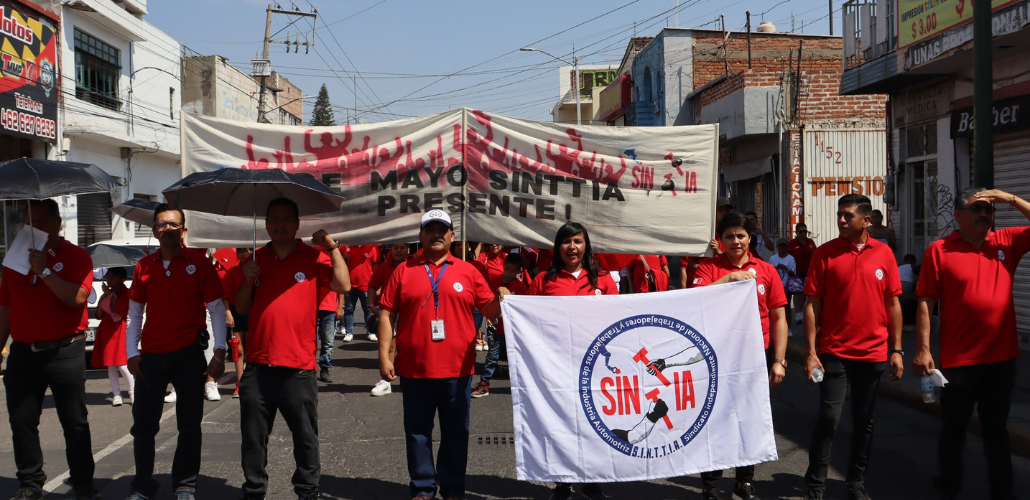
Miembros del comité de revisión salarial del SINTTIA posan con camisetas sindicales rojas y los puños en alto frente al Centro Federal de Conciliación y Registro Laboral.

Los trabajadores mexicanos de General Motors en el complejo de Silao, Guanajuato, obtuvieron aumentos salariales récord tras enfrentarse al alarmismo de la compañía sobre las amenazas arancelarias.

“Al principio llegaron con un, ‘Yo ofrezco un seis por ciento,’” dijo Norma Leticia Cabrera Vasquez sobre la oferta de la compañía en la mesa de negociación.

Members of SINTTIA's salary revision committee pose in red union shirts with fists raised up in the air in front of the Federal Center for Conciliation and Labor Registration.

Mexican General Motors workers in the Silao, Guanajuato, factory complex clinched record raises after staring down company scaremongering about tariff threats.

“They said, well, we’re offering 6 percent,” said Norma Leticia Cabrera Vasquez about management’s offer at bargaining.

“We knew they were going to show up with that, but we said, ‘We still have weeks to negotiate, so we won’t let that intimidate us,’” said Cabrera Vasquez, who worked at the plant for 15 years, and now serves as a leader of the union’s Women’s Department.

Los trabajadores se reúnen con los puños en el aire y la bandera del sindicato detrás de ellos.

Los 1.970 trabajadores de trenes, trolebuses y teleféricos que hacen circular la Ciudad de México podrían declararse en huelga el 13 de marzo.

Su organización sindical, la Alianza de Tranviarios de México (ATM), consiguió inversiones vitales en transporte ecológico y salvó cientos de puestos de trabajo en una campaña de 2016 llamada “Salvemos el trolebús”, que incorporó a los usuarios del transporte público a su lucha por la financiación.

Workers gather with fists in the air and the union's flag flying behind them.

The 1,970 rail, trolleybus, and cable car workers who make Mexico City run have reached a three-year tentative agreement, averting a strike. The deal includes a 3.5 percent raise and increased investments in food voucher benefits and a scholarship fund for workers and their children.

Still in progress is a side letter to address the uniforms, supplies, and safety equipment that they’re owed under their contract but haven’t received regularly.

Trabajadores de Amazon y simpatizantes de la comunidad se reúnen sosteniendo una pancarta con la leyenda CAUSA de Amazon.

Cuatro mil trabajadores de un almacén de Amazon en Carolina del Norte votarán del 10 al 15 de febrero sobre si sindicalizarse con Carolina Amazonians United for Solidarity & Empowerment.

RDU1, en la ciudad de Garner, en las afueras de Raleigh, sería el segundo almacén sindicalizado de Amazon en Estados Unidos.

Amazon workers and community supports gather holding an Amazon CAUSE banner.

Four thousand workers at a North Carolina Amazon warehouse are voting February 10-15 on whether to unionize with Carolina Amazonians United for Solidarity & Empowerment.

RDU1, in the town of Garner, outside Raleigh, would be the second unionized Amazon warehouse in the United States.

It’s an ambitious campaign. The workers are organizing across racial and ethnic divides, through constant turnover, in deeply hostile terrain. At 2.4 percent, North Carolina’s union density is the lowest in the country.

Pages