Tampa TSA Union Averted Privatization Disaster
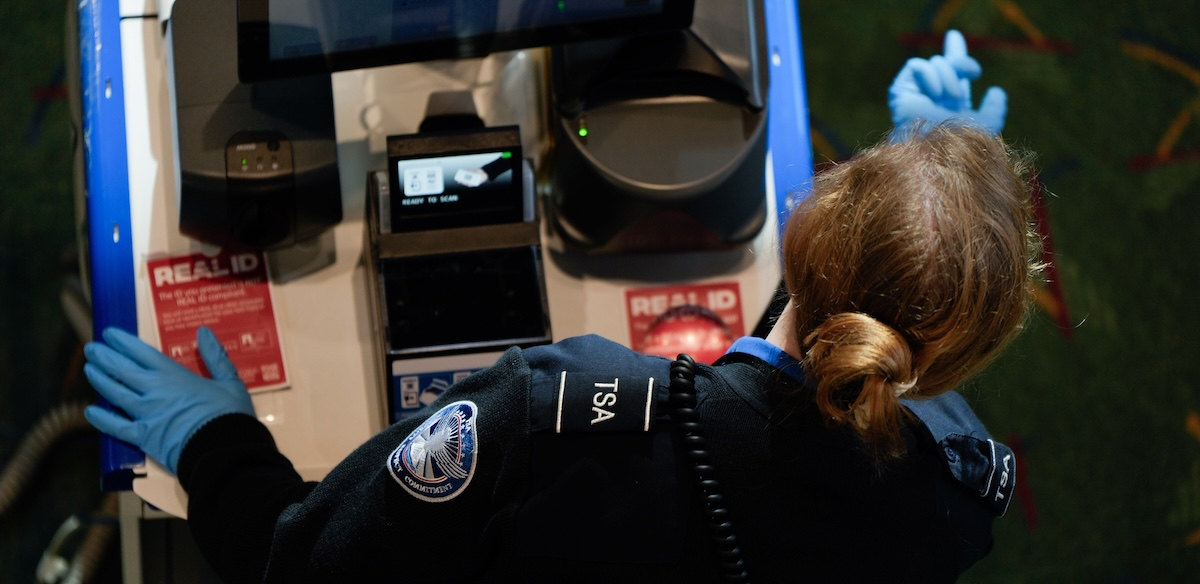
Tampa was going to be the testing ground for airport security privatization, but the TSA union, AFGE, argued it was bad for the community at large to make good jobs into bad ones. Photo: Jenny Kane, Associated Press
TSA agents noticed something was up. “We started seeing people around the airport that you wouldn’t normally see, people in suits,” said Mark Harris, Transportation Security Officer and union steward in Tampa, Florida.
That’s when he realized the airport was a target for the TSA privatization program he had been reading about—the $13 billion Gold+ program. Harris, and his union Government Employees (AFGE) Local 556, swung into action.
Transportation Security Administration workers have been winning battles lately. Twice in two years the Trump administration has tried to cancel their union contract, and twice it has been stopped by the courts. Now things are mostly back to normal, with the contract in force and grievances being processed.
But Gold+ would undermine the union by outsourcing TSO jobs to private companies. As the dimensions of the plan became clear, Harris said his co-workers “felt like they had been kicked in the gut. You know, everything that they had worked for, their federal pension, careers, everything.”
Tampa is a model airport that consistently ranks at the top in customer satisfaction. That’s why TSA picked it for the Gold+ privatization effort, Harris said. “They don’t want to give it to a poor airport or a failing airport. That would be disastrous for TSA, right?”
DOWN THE RABBIT HOLE
Harris first became aware of Gold+ from Against Giants, a website maintained by an ex-TSA agent. As he went down a research rabbit hole, a fellow steward took on some of his union work so he could focus.
Harris, a former police detective, was able to ferret out government documents to back up the union’s case. The agency “seemed like they were trying to do it under the cover of darkness,” he said. The program wasn’t officially acknowledged until July 21, and even then AFGE had to sue to get documents.
Although TSA insisted that the private jobs would pay the same, Harris found that they were saying the opposite to prospective contractors. He found that staff and wage cuts were essential to the program.
When confronted, TSA officials told the workers they didn’t know what the private companies would pay, but also reassured them that their pay wouldn’t change. “That kind of got me… We’re not being truthful about this, right?” Harris said.

The local’s president, Chris Finlay, had worked at a smaller airport at Sanford, Florida, where a private security company came in. At first they hired people at their former pay, but after a few weeks, “they brought them all in one by one. They said, sorry, we can no longer pay you that. We can only pay you this starting pay,” Harris said.
PRESSURE POINTS
The union figured out who would be deciding on Gold+ in Tampa—the airport’s board of directors—and then organized pressure from workers and the community.
The union argued that if privatization came in, salaries would be cut and that would affect local businesses: TSOs wouldn’t take their families out to dinner, or to a football game. If TSOs had to suddenly relocate, it would depress housing prices. Harris created pre-written letters from business owners, airport workers, and others, and union members asked everyone they knew to send the letters.
For workers, the stakes were clear, Harris said. When jobs are privatized, “we know there’s no union protections. But when you work for Homeland Security, when you work for TSA, it’s a career.”
That career was hard-won. Airports used a patchwork of private security companies until TSA was founded in 2001. But it was the union that built TSO jobs into sustainable ones, by winning first union representation and then a contract in 2011. Finally in 2023, TSA workers were included in the federal pay schedule. AFGE now represents 47,000 TSA workers.
Local 556 leadership met with the mayors of Tampa and neighboring St. Petersburg, along with congressional representatives. Airport workers raised questions and objections at in-person town hall meetings with TSA and airport leadership.
Finally, on August 24, Tampa airport leaders decided not to adopt the program. It was apparently a fatal blow—TSA cancelled the entire project right after Tampa’s decision. Private companies had already advertised jobs for the contracts they anticipated.
The union expects the push for privatization to continue, but workers definitively won this round.