Twin Cities Electrical Workers Build Solidarity in the Fight Against ICE Occupation
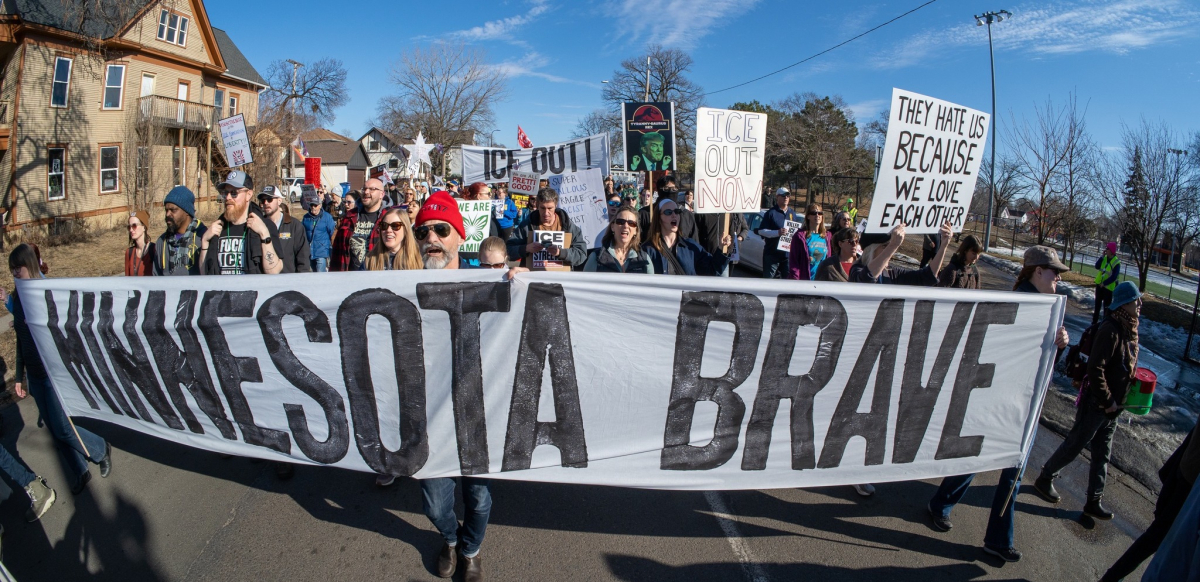
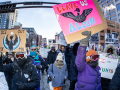
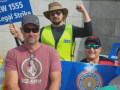
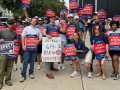
Union members have been involved in the campaign to push ICE out of the Twin Cities and to support immigrant neighbors and fellow workers. Photo: Brad Sigal
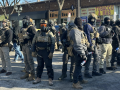
For months, the country and the world have been watching Minnesota, where the Trump administration’s military occupation by ICE, Border Patrol, and Homeland Security has been met by a multi-faceted grassroots resistance.
As rank-and-file electricians, we sought to involve our local unions in the campaign to push ICE out of the Twin Cities and to support our immigrant neighbors and fellow workers.
In early February, three weeks after the murder of Renee Nicole Good and just eight days after the murder of Alex Pretti, 40 members of the Electrical Workers (IBEW) joined an “ICE OUT” potluck to talk about the occupation and its effects on working people.
These kinds of meetings had become common in neighborhoods and community groups. Ordinary people organized ICE watch groups or gathered food for those too afraid to go out, showing what it means to build a collective movement.
Within the IBEW in the Twin Cities, the initiative came from participants in the RENEW program, which focuses on educating and involving apprentices and younger members.
At the potluck, RENEW members of IBEW Locals 292 and 110 shared why and how they had proposed and passed local resolutions against ICE’s activities. Then members shared personal stories of how the ICE presence was affecting them and their communities.
One apprentice described his experience being detained while recording an ICE arrest in his building. Another talked about the effects on the restaurant where he works his second job. Many others talked about their involvement in local efforts to defend their neighbors and their co-workers.
‘MEMBERS STALKED AND HARASSED’
Apprentice electrician Michael Plante (one of the authors of this article) had put forward the resolution in Local 292 on January 13, condemning ICE’s actions and calling to limit its activities.
The resolution called out the federal “secret police” for “the harassment and detention of peaceful citizens and noncitizens based on racial profiling, including multiple brothers and sisters in Local 292. Our own members have been stalked and harassed by ICE, they have woken up to their neighbors’ doors being broken in and neighbors abducted by masked men, and many of our streets and workplaces have become unsafe as a result of this chaos.”
His words were met with support in the union hall. One member compared these times to the civil rights movement in Selma, Alabama. Members from different experiences and backgrounds spoke in support, and the resolution passed resoundingly.
Electricians in St. Paul Local 110 passed their resolution a week later, the day after the Reverend Dr. Martin Luther King Jr., holiday. “If our actions were to cause death we would, and should, be held accountable,” it read. “We would, and should, lose our licenses and careers. We must hold our government to the same standard we hold ourselves.”
YEARS OF ORGANIZING
These resolutions and events reflect years of organizing by apprentices in Locals 292 and 110.
The once-dormant RENEW committee of Local 292 in Minneapolis has become a center for young members who want to build solidarity both inside and outside of the local.
It started with four people, who began holding social hours and family gatherings, and engaging with the local leadership, in an effort to build connection and community among the younger members who hadn’t been present for the struggles of the past.

Coupled with long-term relationship-building and conversations, their efforts slowly—and then all at once—brought in more members than the committee had seen in years.
Across the river, Local 110 members in St. Paul were also busy reviving their RENEW committee. They got interested in what was happening at 292, and the two committees started sharing ideas, event planning, and organizing strategies.
Then members from two other Minnesota locals, 160 and 343, reached out to learn more about what was happening in the Twin Cities locals. We’ve been able to have open conversations about what works, like an open line among rank-and-file members, and what doesn’t, like isolating locals into their own jurisdictions.
ICE OUT GATHERING
Through the process of passing the resolutions, members of 292 and 110 decided to hold the potluck for workers to discuss the occupation. The plan took on greater urgency after Pretti, a member of Government Employees (AFGE) Local 3669 who worked at a VA hospital, was executed by federal agents. Minnesotans were looking for ways to show each other support and solidarity.
The event was held at the East Side Freedom Library, which was started in 2014 with the purpose of building solidarity among working-class people of different backgrounds.
This space holds the history of the labor movement within its walls. It is housed in a historic Carnegie Library, funded in 1917 by profits from the exploited labor of immigrant iron miners, coal miners, and steelworkers. It’s located in a historically working-class and immigrant neighborhood of St. Paul. And today it is home to a new generation of labor organizing, and a celebration of its future.
Workers in the Twin Cities are showing what the long, slow work of relationship-building can accomplish—from the George Floyd uprising to today’s sustained effort to resist facism and build a future based on solidarity.
As tradespeople, we know what it means to build things. We learned at the East Side Freedom Library that the ratification of the U.S. Constitution in 1787 was celebrated with a parade in Philadelphia led by the Bricklayers’ Union. Their banner read, “Both Buildings and Governments Are the Work of Our Hands.”
Gabriel Legierski and Mike Plante are apprentice electricians and members of IBEW Local 292. Peter Rachleff is the co-founder and emeritus co-executive director of the East Side Freedom Library.