Strike Mobilization Leads to Reformer Win in Oregon Nurses
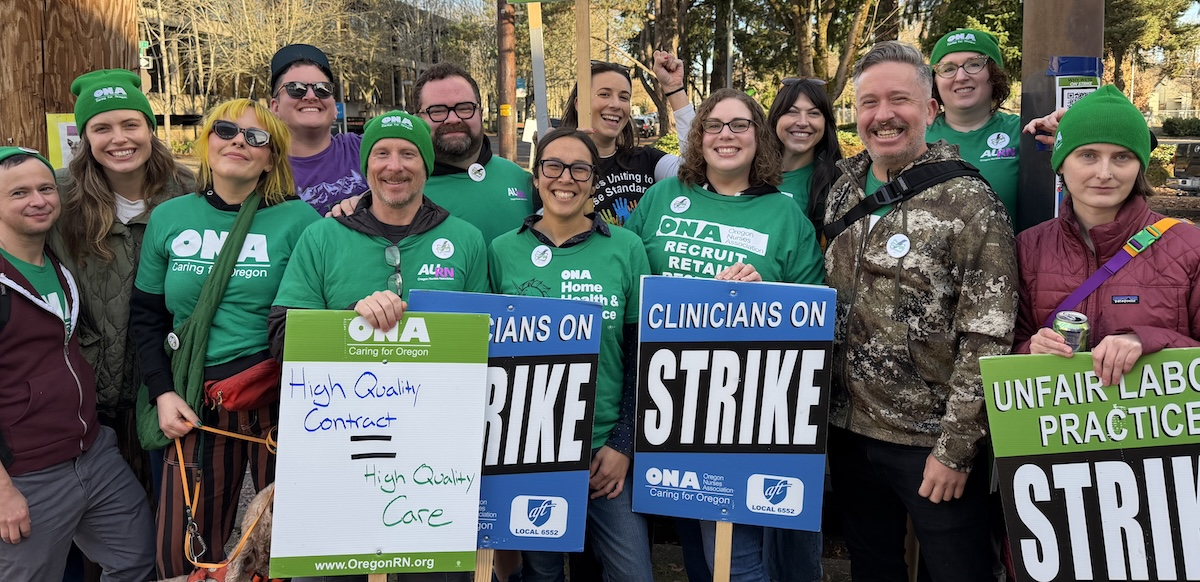
The victorious Caucus for Powerful Reform (CPR) slate was founded in the aftermath of a 46-day strike. It was founded by strike leaders who met through state-wide legislative actions around safe staffing laws and reducing workplace violence.
The 24,000-member Oregon Nurses Association has elected a slate of reform candidates to statewide leadership positions.
The Caucus for Powerful Reform (CPR) won 15 out of the 21 seats it ran for, including the presidency, vice-presidency, secretary, and a majority of board of director seats.
“We need better transparency,” said Raven Winters, a nurse on the slate at Oregon Health & Science University. “We need the union to listen to our members. Ultimately our goal is to have a member-led union, not something that is top-down and controlled by someone with a $300,000 annual paycheck.
“We as nurses need to have the power and control over our union to make things better for us as workers,” Winters said, “but also, make health care better for all Oregonians.”
LONG STRIKE
The new slate won office a year after nurses at eight Providence hospitals across Oregon went on a strike that lasted 46 days, winning improved staffing language and pay. Many nurses were unhappy with how the strike ended and felt that there was more left on the table.
Board member-elect Kyle Cook, a nurse at Providence Portland Medical Center, said he felt disillusioned by how the union’s executive director applied pressure on rank-and-file nurses to vote for a tentative agreement that was ultimately voted down.
Also, towards the end of the strike, the bargaining teams were shrunk to just two nurse representatives per bargaining unit. This put pressure on those nurse leaders and limited communication with the membership. And it happened while union executives were meeting with hospital negotiators behind closed doors.
CONTRACTS OPENING
CPR was founded in the aftermath of the strike by strike leaders who met through state-wide legislative actions around safe staffing laws and reducing workplace violence. They had also supported each other on the picket lines.
They are advocating for more transparency, more internal democracy, and a greater emphasis on fighting for universal health care in the state of Oregon. This includes taking a broader view of bargaining as not just wages and working conditions, but expanding health care access to patients and fighting hospital closures.
The new leaders attributed their win to their social media network and caucus website, but most importantly, to one-on-one conversations where they educated fellow members on why the election mattered to the quality of health care. In the last few days of the election, a massive get out the vote push was critical to their victory.
Due to these efforts, the turnout for the election was around 16 percent according to CPR, up from 4 percent for the last ONA officer election in 2022. The massive increase, nurses said, was in part due to CPR’s efforts to activate members around the issues they care about. The new leaders will take office July 1.

The incoming leaders will have a lot of work ahead of them, as contracts representing half the union’s members will open up during their first year of office. Another 2,300 nurses who joined ONA at Legacy Health hospitals last year are still without a first contract.
The new officers hope to coordinate open bargaining across the state and build robust contract campaigns while also changing the leadership’s culture of confidentiality by making meeting minutes more widely available and making sure officers are being forthright when engaging with the membership.
“We have a real potential to have a very effective, coordinated statewide campaign to take on these issues,” said Vice President-Elect Duncan Zevetski, a night-shift nurse at Oregon Health & Science University. “I would like to see us hit the ground running.”
Joshua Soffler is the program director for the Association for Union Democracy.